Apostles is live: a faithful study companion ready at 354 Populi powered colleges and seminaries. Open the app
Realtime Data

Twenty seven builds, and the decision behind each one

Software that helps students learn faster, and never invents a source

Describe what you want to build. You will be asked about the data behind it, what has to be true of the information, and what the business needs, then handed a requirements brief. You can see it think.

Apostles · Live today

A faithful study companion for every tradition

A student signs in, syncs their real courses in one click, and gets help grounded in their own readings, their tradition's texts, and Scripture. Every claim carries its citation. When the sources do not answer, it says so.

University Study Companion · Live for NYU students

The same engine, cut for the NYU core

Proof the accelerator travels. Built for NYU students working through the core curriculum, every answer is grounded in their own syllabus and this week's actual readings, with adaptive practice drawn from the course materials themselves.

Agent Platform · Private commission

Agents that carry the procedure, not just the answer

A working platform built to order for a single client: agents that execute real operational procedures across several lines of business, reporting to one dashboard. Built fail closed, so when anything is uncertain it stops and asks a human.

Cigar Time · In the workshop

Connoisseur intelligence for the humidor

A companion for the cigar world, distilled from one of the deepest private archives of reviews, ratings, and tasting lore in the hobby. Ask what a stick really is, how it smokes, and whether it is worth the band it wears.

Live today

Apostles

A student learning accelerator for Christian colleges and seminaries. Ready at 354 Populi powered campuses, backed by a research library of 611,789 indexed passages, with a Socratic coach that asks the questions and never writes the paper.

Live today · For NYU students

University Study Companion

Built for NYU students. The Apostles engine re-tuned for the NYU core curriculum: help that already knows the semester course by course, adaptive practice drawn from the course's own materials, and a writing coach that sharpens the argument instead of ghostwriting it.

Private commission

Agent Platform

Agents that execute real operational procedures across several lines of business, under human command and reporting to one dashboard. Built fail closed: when anything is uncertain it stops and asks, and every action is accounted for.

In the workshop

Cigar Time

Decades of expert reviews, ratings, and tasting lore gathered in one place, then made answerable. Straight teardowns of what a cigar delivers against what it costs, built for collectors, lounges, and the trade.

A research library behind every answer

Apostles does not reason from memory. It reasons from a theological research library indexed passage by passage, so a student can follow any claim back to the page it came from. The catalogue keeps growing while enrichment continues.

611,789indexed passages
1,224works catalogued
300+authors
354campuses ready

The coach that never writes the paper

A Socratic writing coach that interrogates the argument, surfaces the weak link, and points at the source the student has not read yet. It will not hand over prose, because the point is the student learning to make the case.

One studio behind every build

Realtime Data Solutions is the practice of Travis Dayton, a data architect who ships production systems in regulated, high stakes domains, from patented financial controls infrastructure to document intelligence pipelines. Values we build by: integrity, stewardship, dignity.

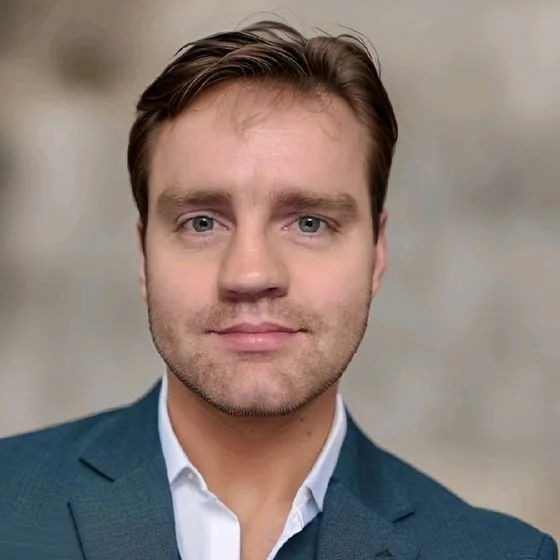
Travis Dayton

Travis Dayton

Data architect and AI engineer. Based in Barcelona.

The architect behind the practice

Travis Dayton has spent more than fifteen years building and governing data systems inside regulated industries, and now builds agentic AI that can be trusted inside those same environments.

His career has been shaped by sectors where a wrong answer carries consequence. At Bayer he established enterprise data governance across pharmaceutical research, regulatory affairs and commercial domains under 21 CFR Part 11 and global GxP. At Gulfstream Aerospace he delivered under ITAR and DFARS, where the nationality and location of the person touching the data is itself a legal control. Before that he authored data governance policy at Portland General Electric under NERC and FERC, and at Andor Health he built governed pipelines for a platform carrying clinical data under HIPAA. GDPR runs across all of it.

That background is why the AI here looks different. These systems cite their sources, refuse rather than invent, and stop to ask a person when the ground is uncertain. They ship as LangGraph applications through one deployment pipeline, with production inference running on owned hardware, so client data does not have to leave the perimeter.

Certifications

  • TOGAF
  • DAMA CDMP and Data Governance
  • Microsoft Azure Data Engineer
  • Carnegie Mellon software architecture

Delivered under

  • 21 CFR Part 11 and GxP
  • ITAR and DFARS
  • HIPAA
  • NERC and FERC
  • GDPR

Education

  • Master of Science, Information Technology
  • Bachelor of Science, Data Analytics
  • Western Governors University

How the work gets built

Requirements here are not a document that goes stale beside the code. They are the program. The specification is itself a LangGraph: every requirement is a node, decomposed until a leaf names exactly one function that has to exist, and agents build against that graph rather than against a brief.

That is what a LangGraph specification is. The requirements, the order they run in, and the test that proves each one are a single executable graph, so the specification can be run, and can fail, in the same way the software can.

1

Decompose until a leaf is buildable

A requirement stays a parent until it can name exactly one implementable function. The tree keeps going down until there is nothing left to interpret.

2

Order it the way the product actually runs

A second relation records what must have run first at runtime. The tree says what the thing is made of. The graph says what happens when. They are deliberately not the same relation.

3

Bind every leaf to real code

Each leaf resolves through an implementation registry to a callable function. Correspondence is a property of the code, not a claim in a table, so the specification cannot quietly drift away from the build.

4

Refuse a requirement that has no test

Every leaf carries assertions that call the function and check the behaviour the requirement asks for. A leaf with no assertion fails. You cannot add a requirement without saying how you would know it works.

5

Let the agents execute against it

Once the LangGraph specification is machine readable and gated, the build is handed to agents. They have somewhere exact to aim, and the gate is what tells them, and me, the moment they are wrong.

Get to know how every build is grounded

Different worlds, from seminaries to operations floors, but every product is held to the same three house rules.

If it cannot cite it, it does not say it

Every claim is traced to a real source the reader can open. Answers come from indexed material, never from a model's recollection, and a citation is part of the answer rather than a footnote bolted on afterwards.

Fail closed, and say so out loud

When the sources do not settle a question, the honest answer is that they do not. Every system here stops and hands control back to a person rather than guessing, because a confident wrong answer costs more than a pause.

Private by default

A student's work belongs to the student and a client's data belongs to the client. Formation and operations both stay behind the wall they were built in, and nothing leaks sideways into a leaderboard or a training set.

Commission the next build

If your institution, your operation, or your obsession deserves software this grounded, write. Tell us the world it lives in and you will get back something real: what it would take, what it would cost, and what it would do on day one.

A person reads every one of these and answers. Your details are kept for that answer and nothing else.

Christian higher educationLive
University core curriculumLive
Agentic operationsIn service
Connoisseur intelligenceIn the workshop

Follow Realtime Data